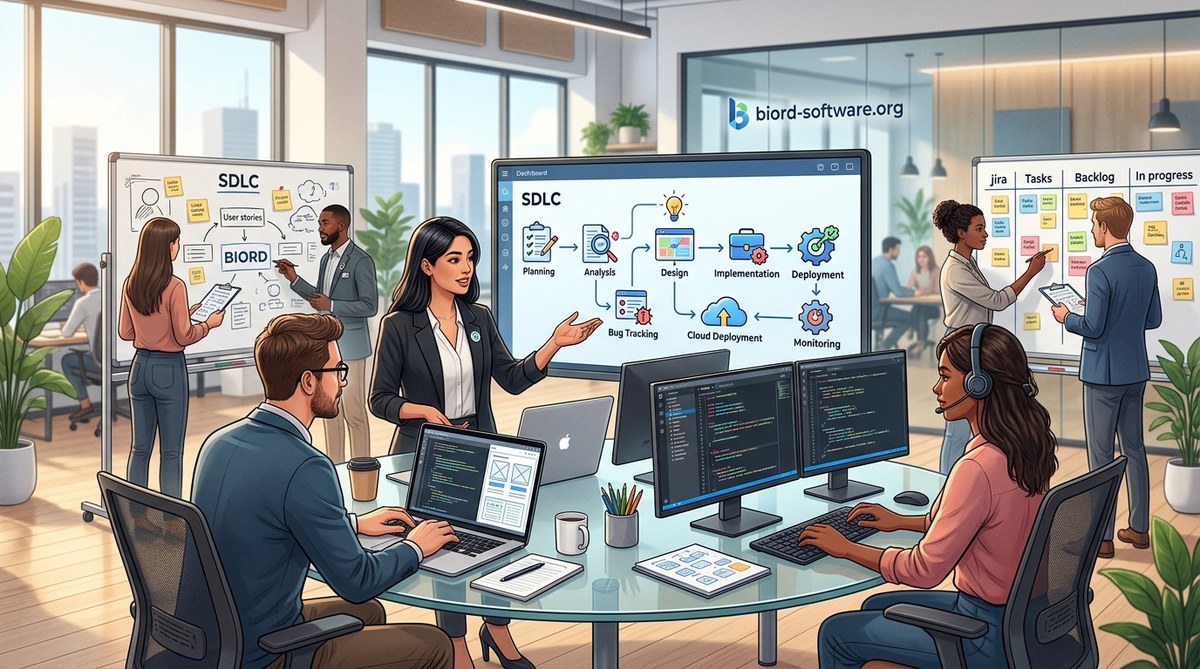
Every software project follows a path from idea to impact. The software development lifecycle SDLC is the roadmap that helps teams align on goals, manage risk, and deliver value with quality. At Biord Software.org we lean on practical tactics, real world examples, and a friendly coaching voice to help tech innovators turn theory into repeatable success. This guide lays out a practical approach to the SDLC that teams can adapt to their size, domain, and velocity while keeping a sharp eye on quality, security, and collaboration.
Why the SDLC matters for teams today
A well defined SDLC provides structure without crushing creativity. It helps teams:
- Align on what to build and why
- Break work into manageable chunks and prioritize high impact features
- Detect risk early through verification and feedback
- Automate repetitive steps to speed delivery
- Improve quality through consistent testing and code review
- Maintain traceability for audits, security, and governance
- Create a culture of continuous improvement
In practice, the SDLC is not about rigid rituals. It is a framework that supports agile teams, DevOps practices, and evolving product goals. The aim is to create predictable delivery cycles that empower developers, product managers, testers, operations staff, and partners to collaborate effectively.
Key phases of the SDLC
The software development lifecycle can be described through a sequence of interrelated phases. Each phase has goals, inputs, outputs, and common activities. You can adapt this structure to your organization, but a clear view of the phases helps with planning and measurement.
1. Requirements and Planning
This is where you decide what to build and why. Clear requirements reduce rework and misalignment.
- Gather input from stakeholders across the business and customers
- Define user stories with acceptance criteria
- Create a prioritized product backlog
- Establish a minimum viable product (MVP) and success metrics
- Identify constraints such as security, compliance, and performance targets
- Map risks and decide how to mitigate them
Pro tips
– Use lightweight discovery sessions to surface the top 5 to 7 priorities.
– Write testable acceptance criteria for each user story.
– Maintain a living backlog with visible priorities to keep teams aligned.
2. Design
Design translates requirements into architecture, data models, interfaces, and technical decisions.
- Define the system architecture and choose an appropriate tech stack
- Create high level and detailed design diagrams
- Model data flows, APIs, and integration points
- Design for security by default and accessibility from the start
- Sketch user interfaces and interaction patterns with a focus on usability
- Plan for scalability, performance, and maintainability
Pro tips
– Involve architecture and product leads early to avoid late rework.
– Create design decisions records that capture why choices were made.
– Use design reviews to surface concerns before coding begins.
3. Implementation (Development)
This phase turns designs into working software. It is the core of the pipeline.
- Set up version control and branching strategies (for example Git flow or trunk based)
- Write clean, well tested code following agreed standards
- Implement features with iterative development and short feedback loops
- Integrate automated tests and code reviews into the workflow
- Use feature flags to separate deployment from release and enable gradual exposure
Pro tips
– Maintain a Definition of Ready for work items so teams start with clear inputs.
– Keep a lightweight architectural guardrail to avoid drift.
– Automate most of the repetitive setup steps to reduce friction.
4. Testing and Quality Assurance
Testing confirms that the software does what it should and does not do what it should not do.
- Perform unit testing for individual components
- Conduct integration testing to verify modules work together
- Run end to end testing to validate user journeys
- Include performance and security testing to catch non functional issues
- Establish continuous testing and test automation where feasible
- Use test data management to ensure realistic yet safe data
Pro tips
– Automate the most time consuming tests to free up testers for exploratory work.
– Prioritize flaky tests and fix them quickly to maintain trust in results.
– Use testing environments that mirror production to reduce environment related issues.
5. Deployment and Release
Deployment moves code into production where users interact with it.
- Build CI CD pipelines that automate build, test, and deploy steps
- Promote code through environments with clear criteria
- Plan releases and use canary or blue green strategies to reduce risk
- Implement feature flags to control exposure and rollback capabilities
- Define rollback and failure handling procedures
Pro tips
– Automate release notes generation to keep stakeholders informed.
– Keep a simple rollback plan that can be executed quickly.
– Use monitoring to detect issues early after a release.
6. Maintenance and Evolution
Sustaining value requires ongoing care and adaptation.
- Manage bug triage and fix prioritization
- Address technical debt with a planned program
- Monitor production and respond to incidents
- Update documentation and knowledge base for new features
- Evolve architecture and tooling as needs change
Pro tips
– Schedule regular debt reviews and tie them to business value.
– Build dashboards to observe system health and user impact.
– Treat knowledge sharing as a lifecycle activity, not a one off task.
7. Governance, Risk, and Compliance
Governance ensures accountability and protection of data, privacy, and security.
- Map regulatory and policy requirements relevant to the product
- Apply secure coding practices and security scanning in CI CD
- Enforce access controls and least privilege
- Maintain audit trails and documentation for compliance
- Align with organizational risk management practices
Pro tips
– Build a lightweight compliance checklist that lives with your backlog.
– Periodically review risk controls and update as laws and technologies evolve.
8. Metrics and Continuous Improvement
Measurement guides decisions and keeps teams focused on outcomes.
- Track leading indicators such as cycle time, work in progress, and deployment frequency
- Monitor lagging metrics like defect escape rate and customer impact
- Use flow metrics to understand bottlenecks and capacity
- Apply predictive analytics to estimate delivery dates and risk
- Foster feedback loops with retrospectives and customer input
Pro tips
– Use a small, well defined set of metrics that tell a story about health and progress.
– Share dashboards with the team and stakeholders to maintain transparency.
– Turn data into action by linking metrics to improvements in the next sprint.
SDLC in practice for mobile apps and APK management
Mobile development introduces unique considerations, especially around packaging, signing, and distribution of APKs (Android) and IPAs (iOS). Here is how SDLC practices map to mobile app workflows and APK management.
- Plan APK and app store release cycles in synchronization with product roadmaps
- Implement signing key management policies including rotation and secure storage
- Maintain versioning discipline that reflects API changes, feature sets, and compatibility
- Use incremental updates to reduce user download sizes and improve reliability
- Integrate mobile testing across real devices and emulators with automated suites
- Monitor app performance in production and collect device level telemetry
- Prepare release notes that clearly communicate new features and fixes
Practical tips for APK management
– Keep a secure key store and restrict access to signing keys
– Use a consistent versioning scheme that aligns with semantic growth
– Document the APK build process in your CI CD pipeline
– Validate compatibility with multiple Android versions and devices
– Use Play Store internal test tracks to gather quick feedback before broad releases
SDLC and content creation workflows
Content creation and software delivery share a common lifecycle. If your product includes documentation, guides, or video walkthroughs, embed content as part of the SDLC rather than a separate activity.
- Translate video walkthroughs into step by step guides and tutorials
- Treat content as a first class deliverable alongside features
- Use content templates to ensure consistency in tone and structure
- Integrate content reviews into the Definition of Done
- Align content with SEO goals to improve discoverability
How to apply this in practice
– Create a content backlog item for major guides and update it with every feature release
– Use video transcripts to accelerate documentation without reducing quality
– Reuse existing assets and repurpose content for different channels
SDLC and modern tech trends
The pace of technology means SDLC must accommodate trends while remaining disciplined.
- Predictive analytics can inform forecasts about delivery timelines and risk
- Cloud and microservices architectures change how you design and deploy
- DevOps practices continue to blur the line between development and operations
- 5G and edge computing influence performance and data locality considerations
- Mobile first design and accessibility continue to be essential
- Security by design remains a cornerstone across all phases
How to stay current without losing control
– Reserve time for technology refresh and architectural reviews
– Keep a lightweight portfolio of tools and automation that scales with the team
– Invest in training and knowledge sharing to keep skills current
Practical tips and checklists
To make the SDLC actionable for teams of different sizes, use these concise checklists.
- Requirements and Planning
- Have a prioritized backlog with clear acceptance criteria
- Define MVP and success metrics
-
Identify risks and mitigation plans
-
Design
- Capture architecture decisions in a design rationale document
- Create wireframes and data models early
-
Review security implications in the design phase
-
Implementation
- Enforce a code review culture with actionable feedback
- Adopt a branching strategy that fits your release cadence
-
Integrate automated tests into the build pipeline
-
Testing
- Build a test automation plan with coverage goals
- Run performance tests on realistic datasets
-
Validate security using static and dynamic analysis
-
Deployment
- Establish a dependable CI CD pipeline
- Use feature flags to manage risk and rollout
-
Prepare rollback and incident response procedures
-
Maintenance
- Track technical debt and schedule time to address it
- Monitor production with dashboards and alerts
-
Keep documentation up to date with product changes
-
Governance and Compliance
- Maintain policy documentation and audit trails
- Enforce access control and data privacy protections
-
Schedule periodic compliance reviews
-
Metrics and Improvement
- Choose a small set of meaningful metrics
- Review data in regular retrospectives
- Use insights to drive the next cycle of improvements
Tools and practices that often help
– Version control systems and code review platforms
– CI CD pipelines with automated testing
– Issue tracking and backlog management software
– Monitoring and observability stacks for production
– Documentation and knowledge sharing platforms
Real world patterns for teams of all sizes
- Small teams (2 to 5 people)
- Keep the SDLC lean with minimal ceremony
- Use lightweight backlogs and short sprints
-
Rely on tight feedback loops and rapid prototyping
-
Medium teams (6 to 15 people)
- Introduce formal design reviews and architecture decisions
- Use CI CD with automated testing to improve reliability
-
Establish cross functional squads around features
-
Large teams (15+ people)
- Enforce governance with architecture review boards
- Use scaled agile frameworks to coordinate multiple teams
- Maintain strong documentation and traceability
In all cases the goal is to balance speed with quality. The SDLC should be a living framework that evolves with your product, team maturity, and market needs.
How Biord Software.org supports your SDLC journey
Biord Software.org is built for tech innovators who want practical guidance, not just theory. Our content covers APK file management, turning video walkthroughs into actionable guides, predictive analytics for project planning, and best practices for software lifecycles. We emphasize a friendly, actionable tone that helps teams implement ideas quickly without losing depth.
- Practical checklists you can use in a sprint
- Real world examples that reflect current tech trends
- Clear explanations of how to apply SDLC principles to mobile apps and cloud based systems
- Guidance on aligning content and product development for better SEO and user engagement
This approach helps you ship with confidence while maintaining a strong focus on quality, security, and user value. It also aligns with the broader tech trends we discuss on Biord Software.org including 5G, edge computing, and data driven decision making.
Final thoughts
Adopting a practical SDLC is not about chasing perfection. It is about building a reliable rhythm that lets your team learn, adapt and improve. Start with a shared understanding of the phases, tailor the practices to your context, and embed feedback loops at every step. Over time you will see faster delivery, higher quality releases, and a team culture that collaborates across disciplines.
Remember that the core strength of the SDLC lies in discipline paired with flexibility. You need consistent practices such as version control, automated testing, and continuous integration, but you also need the ability to adjust priorities when the market or technology shifts. That balance is what transforms a lifecycle into a living engine for growth.
If you are exploring how to implement these ideas with your team, consider starting with a small pilot project. Apply the SDLC framework to this project, measure the impact, and then expand the approach to other initiatives. The goal is to create repeatable outcomes that deliver value to users and stakeholders alike.
Biord Software.org is here to help with practical guidance and insights that translate into real world impact. Whether you are optimizing APK workflows, turning video walkthroughs into comprehensive guides, or weaving predictive analytics into your project planning, a solid SDLC is the backbone of sustainable success.